
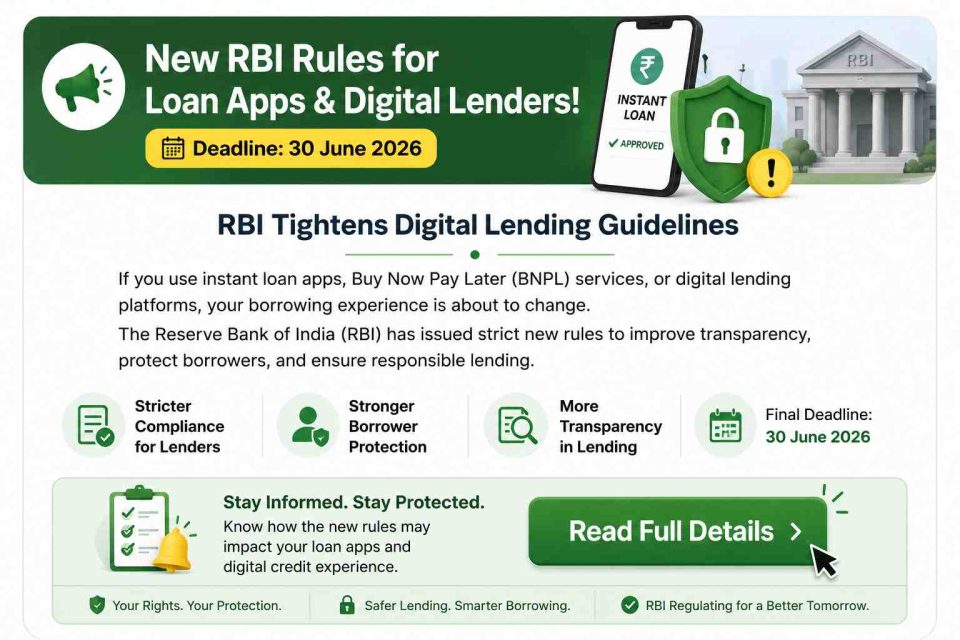
India’s digital credit market changed the way people borrow money. From instant approvals to Buy Now Pay Later (BNPL) options and app-based personal loans, access to credit became faster than ever.
Now, the next phase is not about speed — it is about trust.
Recent regulatory developments are pushing digital lenders toward stronger compliance standards, better borrower disclosures, and more accountable lending practices. As platforms adapt, users may begin to notice visible changes in how digital borrowing works.
What Could Change for Borrowers?
More Transparency Before You Borrow
Loan apps are expected to place greater focus on making important details easier to understand before acceptance.
Borrowers may increasingly see:
- Clear breakdown of total borrowing cost
- Better visibility of charges and repayment obligations
- Improved disclosure before loan confirmation
Slower but More Structured Approvals
Instant decisions may continue, but some platforms could introduce additional validation layers.
This may result in:
- More document verification
- Better identity checks
- Reduced chances of hidden conditions
Greater Accountability Across Lending Partners
Digital lending often involves multiple participants working together behind the scenes.
New compliance expectations encourage:
- Clear responsibility for customer communication
- Better complaint handling processes
- Improved borrower protection standards
What Users Should Do
Before accepting any digital loan:
✓ Read the full repayment schedule
✓ Review processing and service charges
✓ Compare multiple offers before confirming
✓ Borrow only through recognised platforms
✓ Keep repayment reminders active
The Bigger Picture
India’s digital lending ecosystem is entering a more mature stage.
For borrowers, this may mean fewer surprises and more visibility.
For lenders, it creates pressure to build products that are transparent, responsible, and designed for long-term trust instead of short-term growth.
Digital credit is not disappearing — it is evolving.
And for users, understanding the rules may become just as important as accessing the loan itself.
— Wayfarer Editorial
